Big Fear At Low Altitude: Zip-lining in Caldas Novas, Goias, Brazil
This post is Track 16 of Travelogue Soundtrack.
The harness operator had lost patience. “Ou voce pula ou voce se caga” ("you either jump or you shit yourself"). Failing to take the hint, failing to launch and failing to escape my terror, I remain perched, ridiculously immobile, at the top of the zipline.
I first discovered my fear of heights as a seven year old child when on a school trip to the Isle of Man’s Laxey Wheel. My classmates scampered happily upwards to enjoy views from the top of the biggest waterwheel in the British Isles. Yet I remained welded eye-level to the axle, transfixed with terror. The rotation of the bright red 11m long spokes hypnotically churned my stomach. I only surrendered my iron grip on the guide-rail when I rejoined my class as it snaked its way to the safety of firm ground.
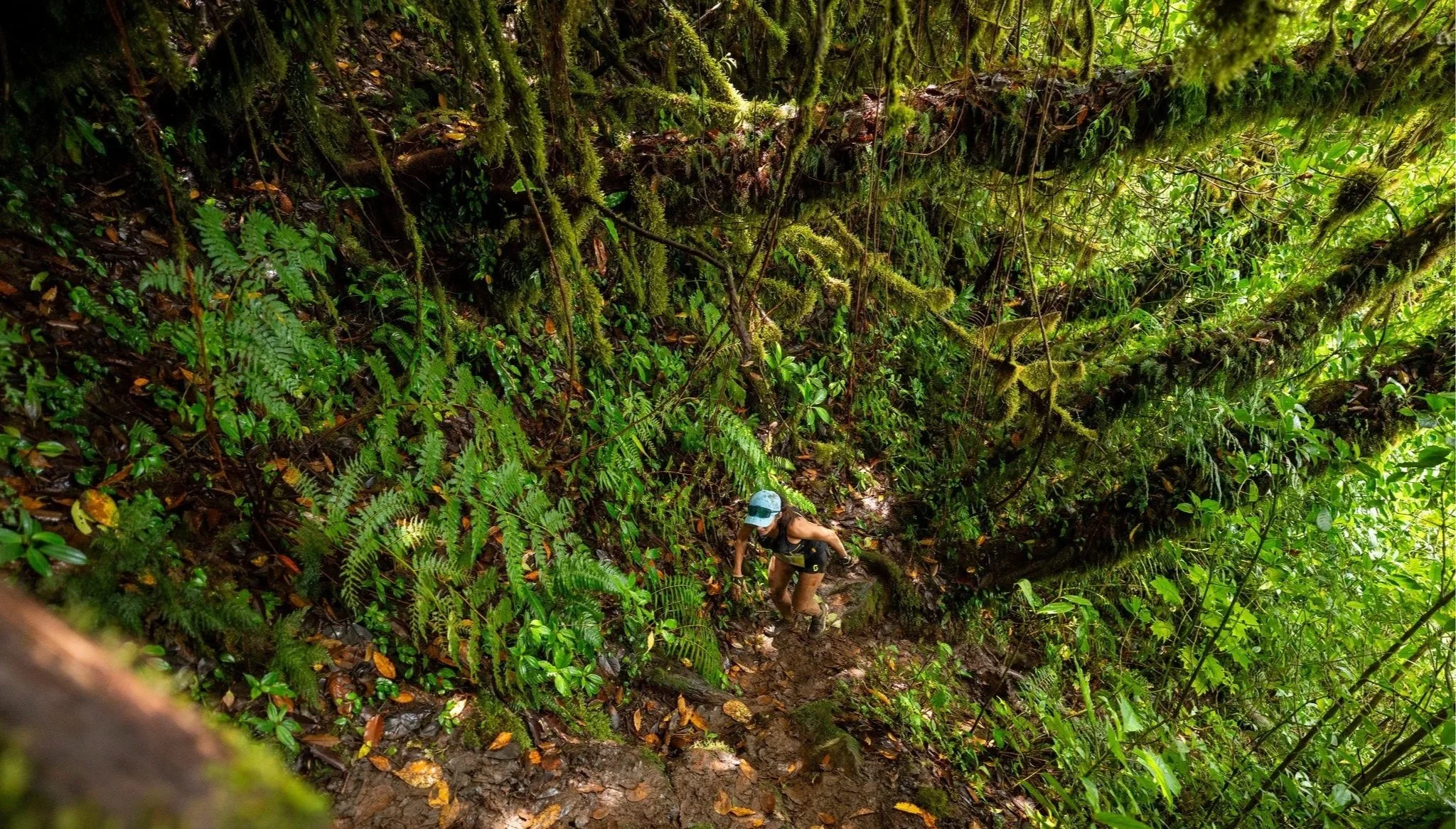
26 years later, I was in Hot Park - Brazil’s largest water park in Caldas Novas, Goais - and was again similarly frozen. I was unable to jump.
Such irrational fears are said to be “all in our head” or more specifically to reside in the amygdala, the tiny fear and anger centre of our brain. But for me, vertigo is a terror of the body not the mind - a rebellion of my physical form against my conscious self. When approaching a precipice, all the cells in my body tighten. Calm whispers of my rational being are overwhelmed by the strident choruses of body molecules screaming “STOP! DON’T! YOU CAN’T! YOU’LL HAVE A HEART ATTACK!!!”
At Presidente Figueiro in Amazonas, my body again froze on the cusp of leaping into the murky brown waters near the foot of the beautiful Santuario Falls. It wasn’t enough for my mind to issue re-assuring thoughts that the piranhas, caimans and other local hazards were safely located a few kilometres away. My body needed proofs of sense rather than of thought. But my eyes could not see beneath the surface.
My mind and my body simply did not trust each other. Apparently my body possessed a greater appetite for self-preservation than my mind. The decision to quit my job in Ireland and move to Latin America was a much more consequential leap into the unknown than that at Presidente Figueiro. I had many fears about doing so - am I wrecking my career?, am I being irresponsible?, will my relationships suffer? is this exactly the wrong thing to do with my life? Yet, I neither hesitated about making the decision, nor equivocated about it once it was made. By contrast jumping from even relatively modest heights produced paralysis.
Of course fear is not a purely negative sensation - it has the excellent side effect of keeping us alive. Although we diminish as people as our fear increases, such self-shrinkage is a reasonable strategy when surrounded by danger. However, life as a small target is a kind of blasphemy - a failure to experience and celebrate the full extent of ourselves. Thus, the paradoxical expansions and contractions of hope and fear create the heartbeat of our lives - supplying the impulses with which we venture into uncertainty.
The week that was ending with absurd paralysis at Hot Park had started more promisingly in Rio De Janeiro. On midnight on New Year’s Eve, I had joined 2 million Cariocas on Copacabana beach. Nearly all of us dressed in white as we arrived at the edge of the Atlantic. We were here to greet Iemanjá, the Goddess of the Water, and to ask her to bless our New Year. Such a peaceful and optimistic mass communal exercise represents humanity at its best - embracing the unknown in hope, rather than retreating from it in fear. Spectacular fireworks announced we had made it safely into the new territory of 2008.
Perhaps I absorbed some of the hope and optimism of Rio’s Reveillon festival at a cellular level. My body relaxed and I jumped. I jumped on the zipline in Hot Park, into the murky Amazonian waters in Presidente Figueiro and the river rapids in Brotas. In mid-air, suspended between fear and hope, my mind and body made their peace with each other. Both only felt complete when leaping into the unknown.

Una Sirena De La Fuente, Parque Central, Antigua, Guatemala
This is the second post in the Spin Cycle series. Post one is available here
Hi, I’m Ilana and I’m writing this post because Robbie is now apparently a fugitive who has vanished without a trace. For the record, I think that going into hiding was a bit extreme. Or maybe I am being unfair - he did have a gun placed under his chin, and I am more used to weapons than Robbie. Guns freak him out - apparently.
When I came across Robbie’s post on this blog, it was the first I had heard of or from Robbie in over two months. Whatever he is doing, I hope that he feels that the coast is sufficiently clear for him to resurface soon. Its probably too late for Robbie and I to meet up again - I’ve moved on, am not longer in Guatemala and write this from the banks of the Amazon in Brazil. But it would still be good to know he’s alive. So Robbie, if you are reading this - come out, come out wherever you are. I’ve missed you! And, hey while you’re at it, maybe you can tell me what the hell happened!! :-)
This is my first time traveling on my own away from home – I’m from Bat Yam, on Israel’s Mediterranean coast – and Robbie was the first person who I met in Latin America that I really connected with. About four months ago I flew from Tel Aviv to New York, where I stayed a week with cousins, before arriving in Guatemala City via North Carolina. My plane touched down at one thirty in the afternoon on a Sunday and by three pm I was unpacking in my new room in Antigua. The host family I stayed with were really kind and looked after me like I was their own daughter. I lived in Colonia El Manchen on Antigua’s North side, which was pretty close by to my Spanish school and to most things in the city. The only downside was that it gets a bit spooky at night.
I spent my first week in Antigua trying to be a good student – though I was late for class twice - and getting to know the other students in my school. In addition to the four hours a day of Spanish lessons, I went on a few trips organised by my school. For the first few days, I did my homework with a group of my fellow students at Fernando’s cafe. But then one of the guys in the group starting weirding me out a bit, so I stopped with the homework club and started studying by myself in the Parque Central.
It was in the Parque Central that I met Robbie. I had noticed him for the two days prior to actually meeting – though I don’t think he noticed me. His mind was on other things. For the first two days we each sat on the same two benches, facing each other a few metres apart. Between us were the sirenas of the park’s famously naughty fountain - mermaids squeezing jets of liquid from their proudly displayed naked breasts.
Each afternoon I would go to do my homework on one park bench and watch as Robbie sketched in an art-pad. It was the sketching that made me notice Robbie in the first place.
One of the main things I felt when I finished my two years in the army recently was a need to be creative again. I don’t want to seem negative about my time as a soldier. I loved the army and am grateful for my time there. Although a lot of my girlfriends got placed in units where their main responsibilities seemed to be to sit on their asses and get fat and lazy, I was assigned to army intelligence. My army service was difficult, I learned a lot and I helped my country.
Even though I know I owe a lot to the army, I also feel that becoming a good soldier meant I sacrificed my creativity – I didn’t even meet or hang out with creative people anymore. In some ways I think that, for all my life, other people have been telling me what to do and what to think – my parents, teachers or hamefaked (army commander). I had begun to feel that every lungful of air I breathed had been exhaled just one second before by someone else. So that’s why I needed to leave Israel, why I chose not to travel with other Israelis and why Robbie and his sketch pad seemed so interesting to me.
On the third day I saw Robbie in the Parque, my regular seat was taken so I decided to sit in the free space beside Robbie on his bench. When he saw me approach, he looked at me, gave me a great smile and said “hey.” As both a greeting and a question, it totally slayed my plans for sitting down in silence to do my homework.
Robbie quickly proved to be really charming. He’s a big guy – about 185cm, in good shape and with broad shoulders and strong arms – but he’s also really sweet and funny. Even though Robbie is a pretty talented artist, he seemed a bit embarrassed when I asked to see what he had been drawing. Most of the recent sketches were of the topless mermaids of the fountain, artistic license applied to the size of their breasts and the violence of the liquid jets exploding from their nipples. Flicking further back in the sketch pad, I noticed a recurring theme of a young woman in various poses - lying on a bed wearing a baggy t-shirt, singing with a guitar or gazing mysteriously into the distance in profile.
Robbie told me that he had learned to draw two years ago as part of a night course he took in Melbourne. Drawing was something he had started in order to take his mind off work. “I am a bit of a worko!” he told me, though he looked so chill that I find it hard to imagine him as a stressed-out workaholic. He became comically evasive when I asked about the girl in his drawings, so of course I teased him about her until he ‘fessed up some details. “Actually, they are two totally different girls - but thanks so much for not noticing the difference. Gets rid of that Rembrant complex I was developing.”
He remained studiously vague about the identity of the first girl - this time I did not push him for details, even though I was really curious - but he was funny, relaxed and self-deprecating about the story of the second girl. “She’s someone I met a few months ago, knew for only eight hours and who totally re-arranged my life. Because of her, I am now unemployed, thousands of miles from home and without a baldy notion about what to do with myself! Any suggestions?”
Robbie made me laugh. Even though I was surprised to find he was really old - 33, twelve years older than me! - he was really easy to talk to and I quickly felt that he was a man I could trust and would want to spend time with.
One of the most difficult things about being away from Israel is that I am away from my boyfriend for the first time in 3 years (I miss you Yair!). Yair has one more year left in the Army and at first I really didn’t want to start traveling without him. But he was really supportive and said he felt I really needed to start traveling now. We both felt confident that our relationship is strong enough to survive six months apart - it may even be a healthy test.
Even in Latin America, Yair feels really close to me. But not having him physically here means I have to be more careful with the male friends I meet. What I liked about Robbie was I didn’t feel I had to even tell him about Yair – a defence tactic I use with guys to prevent them hitting on me. In fact I felt so comfortable with Robbie, I totally forgot to tell him about Yair at all for over a week. Looking back, I should have told him sooner.
Robbie told me that he had been coming to the Parque every afternoon after his Spanish classes since he arrived. As the Parque is the hub around which Antigua revolves, he felt that if Katherine – the second girl in his drawings, the one who had convinced him to quit his job and come to Guatemala – was in Antigua, she would walk through the Parque sooner or later.
Robbie told me he’d been coming to the Parque’s fountain for the last three weeks, each day keeping an eye out for Katherine. Normally, information like this would make me bolt as rapidly as possible to flee a potential weirdo. But, Robbie spoke in a really matter of fact, confident and open way about what he was doing. There was no shame, concealment or desperation in his tone or body-language.
I felt I got where he was coming from - he had met someone he connected with, was invited to travel with her and knew he had messed things up. Belatedly acting on his feelings, he was now being as methodical as possible to try and find her again. Robbie seemed to have reached a point of resignation and acceptance about the reality that he had simply arrived too late. Following up one of the replies to his first blog post, Robbie had found that Katherine performed in a bar near the centre of Antigua just before he had arrived. However, no-one there had seen her since nor knew where she was now. Once again she had disappeared.
“Y’know, the funny thing now is I’m not sure it matters whether I see her again or not. Of course, I’d like to, it felt really right when we met - in a way I hadn’t felt in soooo long. But, although I was an idiot for not acting quicker, I’m glad I eventually found the stones to do something. Leaving Australia feels like I’ve saved myself from drowning. Meeting her was like being thrown a life-ring.”
We changed topics and passed the next hour guessing the life stories of the people passing us in the park - “Korean, learning Spanish, utterly unaware of what a terrible salsa dancer she is” “French couple, have come here to adopt a Guatemalan child, he’s having an affair with his secretary, she only eats lettuce” “American, volunteer in a faith project, believes God planted dinosaur fossils just to mess with our heads.” “Guatemalan, school-girl, will be pregnant and married next year, wonders when these gringos will clear out of her city and go home.”
Our people watching was terminated by the arrival of a thin, forty-something Guatemalan guy who stood a few metres away from us. He opened a Bible and started a manic rant in Spanish - I’ve no idea what he was saying but Dios was the main theme - and generally made anyone within sight of him feel uncomfortable. Grabbing his sketch pad, Robbie stood up up suddenly. “Hey, I’ve an idea” he said, before flashing a mischievous grin. “Wanna come with?”
Its getting late and I have a big day jungle trekking tomorrow, so I will finish this another time. But, by saying “yes” to Robbie, I began my best week in Guatemala. I will write about what we did and how Robbie made an enemy of a local hitman in my next post.

Salto De Caburni Waterfall, Sierra Escambray, Cuba
Reflecting on the Roman philosopher Seneca, Alain De Botton wrote “in mighty natural phenomena lie reminders of all that we are powerless to change, of all that we must accept.”
Philosophers are drawn to nature for many reasons. Seneca began to study nature as he prepared for the almost inevitable death sentence that would be pronounced upon him by his depraved former pupil, the emperor Nero. Noting our powerlessness to amend the changing of the seasons, Seneca recommended the Stoic motto “that which you cannot reform, it is best to endure.” Reflecting on the beauty created by nature’s “frightful energies” more than 1,800 years later, Nietzsche suggested that we should learn how to cultivate and use even destructive emotions like anger.
Travel is often a philosophical quest to map an itinerary of personal meaning. For many of the travelers I have encountered in Latin America, physical locations have most significance as signposts on journeys to find or lose themselves. As this is a continent of the most spectacular beauty, it is not hard to find places that Seneca or Nietzsche might have approved of as being perfect for reflection. But my own personal list of five places to absorb life lessons from nature is:
1. For peace - It is easy to see why local Maya creation myth holds Lago De Atitlan in Guatemala to be the “womb of the world.” Swimming in this beautiful lake, surrounded by three volcanoes, is like bathing in warm amniotic fluid.
2. For awe - Perhaps one of the most stupefying examples of nature showing off, Iguacu Falls in Argentina / Brazil / Paraguay is simply too much majesty for one country to lay claim to.
3. For freedom - The sensation of swaying and stumbling over an active lava field on Volcan De Pacaya is both exhilarating and a bit terrifying. Such unfettered proximity to potentially lethal energy would not be permitted in more insurance-conscious societies. This experience is a healthy reminder of the price in liberty we pay to feel sanitized and safe.
4. For wonder / despair - The Amazon in Brazil is perhaps our planet’s most ecologically important region. Walking the rainforest with an experienced guide is a humbling insight to the amazing natural pharmacy that our species is rapidly destroying.
5. For clarity - Clear air, tranquility and stunning forest views are almost immediate rewards during a mountain hike in Cuba’s Sierra Escambray. A swim at the foot of the Salto De Caburni Waterfall is a reward for the hike and any thoughts it inspires.

Road To Sucre, Bolivia - Photo By Jacqueline Mascini and Peter Stonestreet
Bolivia is a landlocked Andean republic of vibrant indigenous culture, great poverty and spectacular beauty. Concerns such as road safety and hygiene - the themes of this article about the constitutional capital Sucre - are often mitigated by the welcome afforded visitors by Bolivians. It is common for visitors to this country to fall in love with Bolivia as an understated jewel of South America.